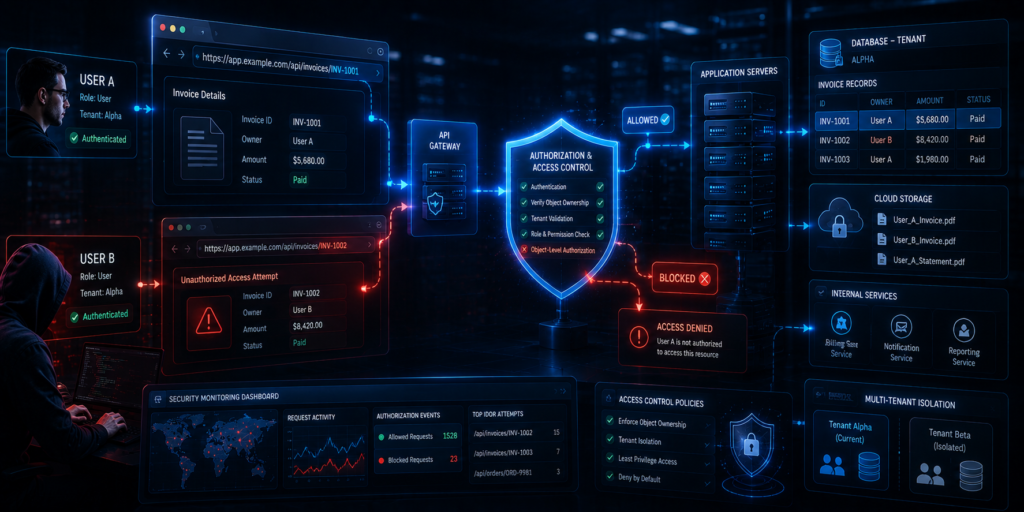
Cyber Security covers a wide range of topics related to protecting systems, applications, networks, and digital assets against cyber threats and security vulnerabilities.
This category includes penetration testing, ethical hacking, vulnerability assessments, malware analysis, security awareness, incident response, and defensive security practices.
Readers can explore attack methodologies, security tools, cybersecurity frameworks, exploitation techniques, and practical guidance for improving organizational security posture.
The blog also shares technical tutorials, real-world case studies, security research, beginner-friendly learning content, and advanced cybersecurity concepts.
Whether you are a student, IT professional, pentester, SOC analyst, or security researcher, this category provides practical and up-to-date cybersecurity knowledge.
Identity is now one of the most important security boundaries in modern IT environments. Employees, contractors, administrators, applications, APIs, cloud workloads, and...
Containers have changed how modern applications are built, shipped, and deployed. Docker makes it easy to package an application with its dependencies...
GraphQL has changed how modern applications communicate with backend services. Instead of exposing many fixed endpoints like a traditional REST API, GraphQL...
REST APIs are now a core part of modern software. Web applications, mobile applications, cloud platforms, SaaS products, payment systems, and microservices...
APIs have become the backbone of modern applications. Mobile apps, SaaS platforms, payment systems, cloud services, microservices, and third-party integrations all depend...
Startups move quickly. New features are released, APIs are added, cloud infrastructure grows, and customer data starts flowing through systems that may...
Modern web applications constantly work with objects: user profiles, invoices, documents, support tickets, orders, messages, images, and API records. These objects are...
XML External Entity (XXE) is a web application security vulnerability that occurs when an application processes untrusted XML using an insecurely configured...
Server-Side Request Forgery (SSRF) is a web application security vulnerability that allows an attacker to influence requests made by a server. Instead...