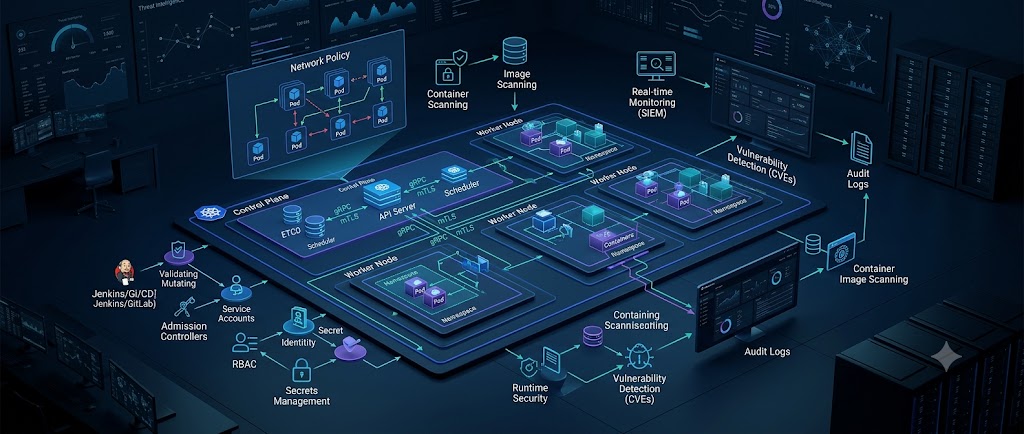
Cloud Security focuses on protecting cloud environments, services, applications, and infrastructure against modern cyber threats, misconfigurations, and unauthorized access.
This category covers AWS, Azure, and Google Cloud security, IAM protection, container security, Kubernetes security, logging, monitoring, and cloud compliance best practices.
Readers can explore cloud penetration testing, cloud threat detection, infrastructure hardening, storage security, network security, and real-world cloud attack scenarios.
The blog also shares cloud security assessment methodologies, DevSecOps practices, zero trust concepts, and practical recommendations for securing cloud-native environments.
Whether you are a cloud engineer, security consultant, SOC analyst, or cybersecurity learner, this category provides valuable cloud security knowledge across multiple platforms.
Serverless computing has changed how organizations build, deploy, and manage modern applications. Instead of maintaining traditional servers, developers can run application code...
Cloud platforms have changed how organizations build, deploy, and operate applications. Infrastructure can now be created in minutes, scaled automatically, and managed...
Containers have changed how modern applications are built, shipped, and deployed. Docker makes it easy to package an application with its dependencies...
Kubernetes has become a core platform for running modern cloud-native applications, but its flexibility also creates a large security surface. Kubernetes security...
Google Cloud Platform (GCP) is widely used to host web applications, APIs, databases, containers, machine learning workloads, data platforms, and enterprise infrastructure....
Microsoft Azure has become a major platform for hosting enterprise applications, APIs, databases, virtual machines, containers, storage, and business-critical services. As organizations...
Amazon Web Services powers applications, APIs, databases, storage platforms, and enterprise infrastructure across almost every industry. As organizations move more workloads into...
Cloud environments have changed how organizations build, deploy, and manage applications. Instead of relying only on traditional data centers, companies now use...
When organizations migrate their workloads to the cloud, they often assume the cloud provider handles all security concerns. This dangerous misconception leaves...
Artificial intelligence has evolved from an experimental advantage into core enterprise infrastructure. From customer support agents and code generation pipelines to automated...