JWT Security Best Practices: Secure JSON Web Token Implementation
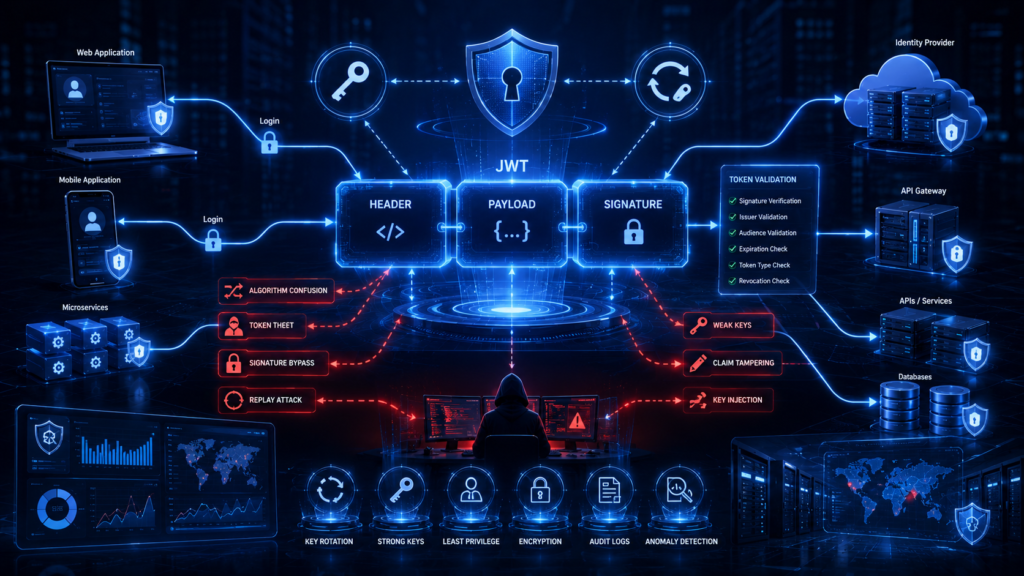
JSON Web Tokens are widely used to carry authentication and authorization information between applications, APIs, identity providers, and microservices. Because JWTs can...
OAuth 2.0 has become one of the most widely used authorization frameworks for modern web applications, APIs, mobile applications, and cloud services....
REST APIs are now a core part of modern software. Web applications, mobile applications, cloud platforms, SaaS products, payment systems, and microservices...
APIs have become the backbone of modern applications. Mobile apps, SaaS platforms, payment systems, cloud services, microservices, and third-party integrations all depend...
Startups move quickly. New features are released, APIs are added, cloud infrastructure grows, and customer data starts flowing through systems that may...
Remote Code Execution (RCE) is one of the most serious vulnerability classes in cybersecurity because it can allow an attacker to execute...
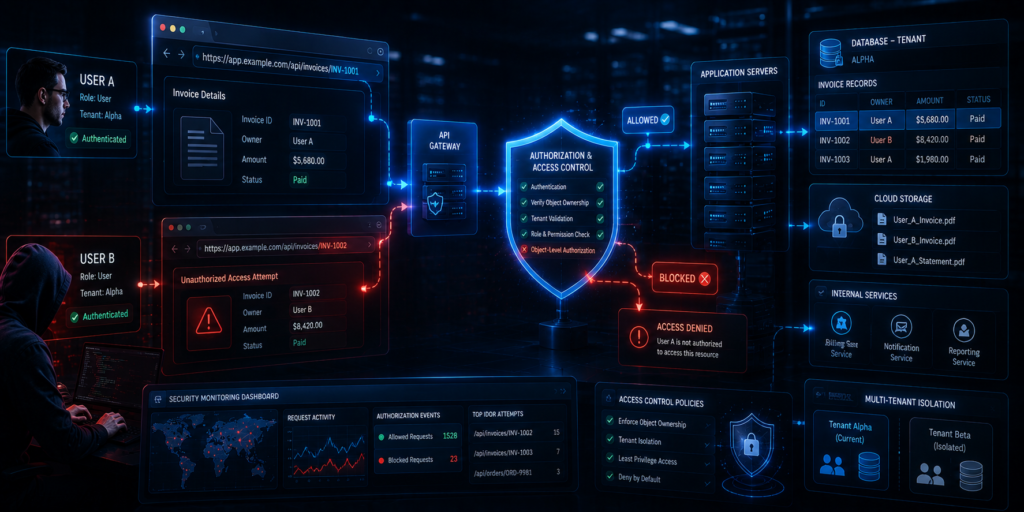
Modern web applications constantly work with objects: user profiles, invoices, documents, support tickets, orders, messages, images, and API records. These objects are...
XML External Entity (XXE) is a web application security vulnerability that occurs when an application processes untrusted XML using an insecurely configured...
Server-Side Request Forgery (SSRF) is a web application security vulnerability that allows an attacker to influence requests made by a server. Instead...
Cross-Site Scripting (XSS) is one of the most common web application security vulnerabilities. It occurs when an application allows untrusted data to...