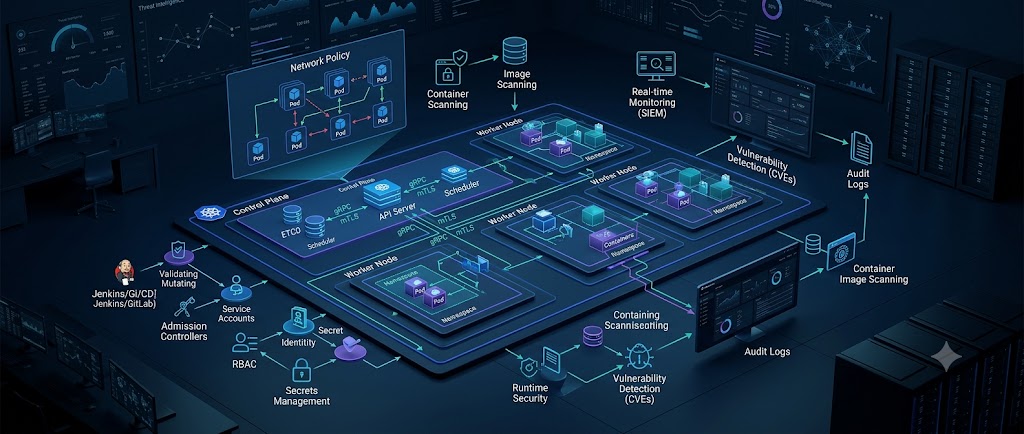

Cloud environments have changed how organizations build, deploy, and manage applications. Instead of relying only on traditional data centers, companies now use cloud services for computing, databases, storage, APIs, containers, serverless applications, identity management, and business-critical workloads.
This makes cloud penetration testing an important part of modern security programs. A cloud environment can contain thousands of resources, dynamic IP addresses, third-party integrations, temporary credentials, storage services, APIs, and complex identity relationships. A single security misconfiguration can sometimes expose an entire application or sensitive dataset.
Cloud penetration testing helps security teams identify weaknesses before attackers exploit them. It combines traditional penetration testing techniques with cloud-specific security testing around identity, permissions, storage, APIs, networking, workloads, and cloud configuration.
Organizations should also understand the rules of the cloud provider before testing. For example, Microsoft allows authorized penetration testing of customer-owned Azure resources under its published rules of engagement, while certain activities such as DDoS testing are prohibited.
What Is Cloud Penetration Testing?
Cloud penetration testing is an authorized security assessment designed to identify and validate vulnerabilities in cloud-hosted infrastructure, applications, identities, services, and configurations.
Unlike a traditional network penetration test, a cloud assessment does not focus only on IP addresses, ports, and operating systems.
A cloud penetration tester may examine:
- Identity and access management
- Cloud user and service permissions
- Virtual machines
- Containers and Kubernetes
- APIs
- Serverless functions
- Cloud storage
- Databases
- Network security controls
- Security groups and firewall rules
- Secrets and credentials
- CI/CD pipelines
- Logging and monitoring
- Authentication mechanisms
- Multi-tenant isolation
- Cloud configuration
- Third-party integrations
The objective is not simply to find vulnerabilities. A professional assessment should determine whether a vulnerability can actually affect confidentiality, integrity, or availability.
For example, discovering that a storage bucket has an unusual configuration is useful, but proving that an unauthorized user can access sensitive business data provides much stronger evidence of risk.
Why Cloud Penetration Testing Is Important
Cloud platforms provide powerful security controls, but those controls must be configured correctly.
A cloud provider may secure the underlying infrastructure while the customer remains responsible for identities, permissions, applications, configurations, and data depending on the service model.
NIST highlights security and privacy considerations that organizations should evaluate when moving applications and data into public cloud environments.
Cloud Environments Have Large Attack Surfaces
A modern application may expose:
- Web applications
- REST APIs
- GraphQL APIs
- Mobile APIs
- Public IP addresses
- Load balancers
- Storage services
- Authentication endpoints
- Administrative interfaces
- Serverless functions
- Container registries
- CI/CD systems
Each component can introduce another potential attack path.
Misconfiguration Can Become a Security Incident
Cloud environments are highly configurable. That flexibility is useful for developers but can also create security problems.
Examples include:
- Publicly accessible storage
- Excessive IAM permissions
- Exposed management interfaces
- Weak security groups
- Unrestricted network access
- Hardcoded credentials
- Missing encryption
- Poor logging
- Overly permissive service accounts
A penetration test can determine whether these conditions are exploitable.
Shared Responsibility Model
One of the most important concepts in cloud security is the shared responsibility model.
The cloud provider is responsible for securing parts of the underlying infrastructure, while the customer remains responsible for securing resources and configurations they control.
The exact division depends on whether the organization uses IaaS, PaaS, or SaaS.
Infrastructure as a Service
With IaaS, customers generally have more responsibility for:
- Operating systems
- Network configuration
- Applications
- Identity
- Security groups
- Data
- Installed software
Platform as a Service
PaaS reduces infrastructure management but still requires secure configuration of:
- Applications
- APIs
- Authentication
- Data
- Access policies
- Secrets
- Application-level controls
Software as a Service
SaaS customers usually have less infrastructure responsibility but still need to secure:
- User accounts
- Authentication
- Authorization
- Data access
- Tenant configuration
- Integrations
A good cloud penetration test should clearly define which parts of the environment are owned by the customer and which belong to the cloud provider.
Cloud Penetration Testing Methodology
A structured methodology makes a cloud penetration test safer and more useful.
1. Define Scope and Authorization
Never begin cloud testing without explicit authorization.
The scope should identify:
- Cloud provider
- Account or subscription
- Tenant
- Regions
- IP ranges
- Applications
- APIs
- Cloud services
- Test accounts
- Production or staging systems
- Testing window
- Allowed techniques
- Restricted techniques
The rules of engagement should also define what happens if the tester discovers a critical vulnerability.
This is particularly important because cloud providers may have their own testing restrictions. Microsoft, for example, publishes specific penetration-testing rules for Azure.
2. Understand the Architecture
Before attacking the environment, map the architecture.
Identify:
- Internet-facing services
- Internal networks
- Virtual machines
- Containers
- Load balancers
- APIs
- Databases
- Storage
- Identity providers
- Management interfaces
- Serverless workloads
- Monitoring systems
An architecture diagram can reveal relationships that are difficult to understand from individual scan results.
3. Perform Cloud Reconnaissance
Reconnaissance identifies the externally visible attack surface.
Typical activities include:
- Domain enumeration
- Subdomain discovery
- DNS analysis
- Certificate discovery
- Public IP identification
- Technology fingerprinting
- API endpoint discovery
- Cloud asset discovery
- Public storage discovery
- Search-engine reconnaissance
The goal is to determine what an external attacker can see without authenticated access.
4. Assess Identity and Access Management
Identity is one of the most important areas of cloud penetration testing.
Testers should examine:
- User permissions
- Roles
- Groups
- Service accounts
- Managed identities
- Access keys
- Temporary credentials
- MFA enforcement
- Privilege boundaries
- Cross-account access
- Cross-tenant access
- Role assumptions
The main question is:
Can an identity perform actions beyond what it actually needs?
For example, a web application may use a cloud service account with permissions to read an entire database when it only needs access to a single table.
That creates unnecessary blast radius if the application is compromised.
CISA’s cloud security architecture emphasizes identity management, vulnerability management, segmentation, and continuous security monitoring across cloud environments.
5. Test Network Security
Cloud networks often use virtual networks, subnets, security groups, network ACLs, firewalls, and private endpoints.
Testing should examine whether:
- Administrative ports are publicly accessible
- Internal services are unnecessarily exposed
- Security groups are overly permissive
- Network segmentation is effective
- Sensitive databases are reachable from untrusted networks
- Management interfaces are properly restricted
- Internet-facing services can communicate with internal resources
A common issue is exposing services such as SSH or remote administration interfaces directly to the internet without strong access controls.
6. Test Cloud Storage
Storage is another major attack surface.
Depending on the provider, testers may examine:
- Public buckets
- Public blobs
- Anonymous access
- Weak access policies
- Excessive permissions
- Exposed backups
- Sensitive files
- Misconfigured encryption
- Public URLs
- Temporary access tokens
A penetration tester should avoid downloading unnecessary sensitive information. If access is confirmed, collect only the minimum evidence required to demonstrate the vulnerability.
7. Test Web Applications and APIs
Cloud applications frequently expose APIs that connect frontend applications to backend services.
Testing can include:
- Authentication testing
- Authorization testing
- IDOR/BOLA testing
- Input validation
- Injection testing
- Rate-limit testing
- Session management
- JWT validation
- API key security
- CORS configuration
- SSRF testing
- Business-logic testing
For example, an API may correctly authenticate a user but fail to verify whether that user owns the requested cloud resource.
This can result in unauthorized access to another customer’s data.
For related API security testing, security teams can also review the OWASP guidance and combine it with practical vulnerability labs such as cyber security labs for controlled hands-on practice.
8. Test Compute Workloads
Virtual machines and cloud workloads should be assessed for:
- Missing patches
- Weak authentication
- Exposed services
- Vulnerable applications
- Privilege escalation
- Insecure configurations
- Metadata-service exposure
- Weak secrets management
A compromised web server can sometimes become a stepping stone toward cloud credentials or internal services.
For that reason, testing should examine both the initial vulnerability and the potential attack path that follows it.
9. Assess Containers and Kubernetes
Containerized applications introduce another layer of security concerns.
Testers should examine:
- Exposed Kubernetes APIs
- Weak RBAC
- Privileged containers
- Container escape risks
- Insecure images
- Exposed registries
- Secrets in manifests
- Excessive service-account permissions
- Weak network policies
Kubernetes should not be treated as automatically secure simply because it runs inside a trusted cloud environment.
The security of the cluster depends heavily on identity, configuration, workloads, networking, and secrets management.
Common Cloud Security Vulnerabilities
Several weaknesses appear repeatedly during cloud assessments.
Excessive IAM Permissions
Users and applications receive permissions they do not actually require.
This violates the principle of least privilege and increases the impact of account compromise.
Publicly Exposed Storage
Sensitive files, backups, logs, or configuration files may become accessible because of incorrect storage permissions.
Exposed Cloud Credentials
Credentials may accidentally appear in:
- Source code
- Git repositories
- CI/CD variables
- Configuration files
- Docker images
- Application logs
Credential exposure can become especially dangerous when the account has administrative permissions.
Weak Security Groups
A security group allowing unrestricted inbound access to sensitive services can expose internal infrastructure.
Insecure APIs
Poor authorization can allow authenticated users to access resources belonging to other users or tenants.
Server-Side Request Forgery
SSRF vulnerabilities in cloud applications deserve special attention because a vulnerable application may have access to internal cloud services that are not directly accessible from the internet.
Missing Logging
A vulnerability becomes more dangerous when defenders cannot detect exploitation.
CISA’s cloud security architecture stresses understanding available cloud logs, their fields, delivery, processing, storage, and retrieval.
Cloud Penetration Testing Tools
The exact toolkit depends on the engagement, but commonly used tools include:
Nmap
Useful for network discovery and service enumeration where permitted.
Burp Suite
Useful for testing:
- Web applications
- REST APIs
- Authentication
- Authorization
- Sessions
- Input validation
Cloud CLI Tools
Cloud providers offer command-line interfaces that help authorized testers understand resources and permissions.
Examples include:
- AWS CLI
- Azure CLI
- Google Cloud CLI
These should be used only against authorized accounts and resources.
ScoutSuite
ScoutSuite can help assess cloud configurations across supported cloud environments.
Prowler
Prowler is commonly used for cloud security assessment and configuration auditing.
Pacu
Pacu is an AWS-focused penetration-testing framework designed for authorized security assessments.
Automated tools should not replace manual testing. A scanner may identify a suspicious configuration, but a skilled tester must determine whether it creates a meaningful security impact.
Cloud Penetration Testing vs Cloud Security Assessment
These terms are related but not identical.
A cloud security assessment often focuses on configuration, compliance, architecture, and security posture.
A cloud penetration test goes further by attempting to validate whether weaknesses can be exploited.
For example:
Assessment:
A storage resource allows public access.
Penetration test:
The tester verifies whether an unauthorized user can actually retrieve sensitive data.
Both approaches are valuable, and mature security programs often use them together.
AWS, Azure, and Google Cloud Testing
Cloud penetration testing techniques vary between providers.
AWS
Testing commonly involves:
- IAM
- S3
- EC2
- Lambda
- API Gateway
- VPC
- Security Groups
- CloudTrail
- EKS
Microsoft Azure
Azure assessments may include:
- Entra ID
- Virtual Machines
- Storage Accounts
- App Services
- Azure Functions
- Key Vault
- Azure SQL
- NSGs
- Managed Identities
Microsoft recommends regular penetration testing and remediation of critical findings for Azure resources.
Google Cloud
Google Cloud testing may involve:
- IAM
- Compute Engine
- Cloud Storage
- Cloud Functions
- Cloud Run
- GKE
- VPC
- Service Accounts
Regardless of provider, identity and authorization should remain a major focus.
Best Practices for Cloud Penetration Testing
Use Least Privilege
Give testers only the access required for the engagement.
Separate Testing Accounts
Whenever possible, use dedicated test accounts, subscriptions, projects, or tenants.
Avoid Destructive Testing
Do not delete production resources, corrupt databases, or perform uncontrolled denial-of-service testing.
Protect Test Credentials
Temporary credentials should be securely stored and revoked after the assessment.
Minimize Sensitive Data Collection
If a vulnerability exposes sensitive information, capture only enough evidence to demonstrate the issue.
Test Detection as Well as Prevention
A mature cloud assessment should determine whether security monitoring detects suspicious activity.
Modern cloud security programs increasingly combine prevention, continuous testing, and detection validation. Microsoft’s cloud security testing guidance recommends validating security controls across the attack surface and testing identity-based attacks and detection mechanisms.
How to Write a Cloud Penetration Testing Report
A professional report should be understandable to both technical teams and management.
Each vulnerability should contain:
- Finding title
- Severity
- CVSS score where appropriate
- Affected resource
- Description
- Business impact
- Technical impact
- Evidence
- Reproduction steps
- Remediation
- References
For example:
Finding: Excessive IAM permissions assigned to application role
Severity: High
Impact: A compromise of the application could allow unauthorized access to sensitive cloud resources.
Recommendation: Remove unnecessary permissions and implement least-privilege access policies.
The report should also include an executive summary explaining the overall security posture.
How to Learn Cloud Penetration Testing
Cloud security requires knowledge across multiple areas.
A good learning path includes:
- Networking fundamentals
- Linux administration
- Web application security
- API security
- IAM concepts
- AWS, Azure, or GCP fundamentals
- Cloud networking
- Containers
- Kubernetes
- Cloud logging and monitoring
- Threat modeling
- Penetration testing methodology
Practical experience is especially important. Reading documentation alone will not teach you how cloud attack paths behave in real environments.
You can supplement your knowledge with cyber security training and practice on hands-on labs.
For professional cybersecurity resources and security services, visit PentestHint.
Career Opportunities in Cloud Penetration Testing
Cloud security skills are increasingly useful for penetration testers, application security engineers, red teamers, security consultants, and cloud security engineers.
A junior penetration tester who understands traditional web security but also knows IAM, cloud networking, containers, APIs, and cloud configuration can assess much more realistic attack surfaces.
Useful career roles include:
- Cloud Security Engineer
- Cloud Penetration Tester
- Red Team Operator
- Application Security Engineer
- Security Consultant
- DevSecOps Engineer
- Cloud Security Architect
- Vulnerability Analyst
Certifications can help demonstrate knowledge, but practical testing ability remains important.
Future of Cloud Penetration Testing
Cloud environments are becoming more dynamic.
Organizations increasingly use:
- Kubernetes
- Serverless applications
- Infrastructure as Code
- Multi-cloud architectures
- CI/CD pipelines
- AI workloads
- API-driven infrastructure
- Identity-based security controls
This means cloud penetration testing will increasingly move beyond traditional network scanning.
Identity attack paths, authorization flaws, supply-chain weaknesses, exposed secrets, cloud-native workloads, and automated infrastructure will become increasingly important areas of assessment.
Security testing should also become continuous rather than something performed only once a year. Microsoft recommends establishing a continuous testing rhythm and validating security controls throughout the workload lifecycle.
Cloud Penetration Testing Checklist
Before completing an engagement, verify that you have considered:
- Written authorization
- Defined scope
- Cloud provider rules
- External attack surface
- IAM permissions
- MFA
- Service accounts
- Temporary credentials
- Network security
- Security groups
- Public storage
- APIs
- Web applications
- Virtual machines
- Containers
- Kubernetes
- Serverless functions
- Secrets
- Encryption
- Logging
- Monitoring
- Detection controls
- Data exposure
- Privilege escalation
- Cross-account access
- Cross-tenant isolation
- Business impact
- Remediation recommendations
- Retest requirements
Frequently Asked Questions
What is cloud penetration testing?
Cloud penetration testing is an authorized security assessment that identifies and validates vulnerabilities in cloud infrastructure, applications, identities, APIs, storage, workloads, and configurations.
Why is cloud penetration testing important?
Cloud environments contain complex identity, networking, application, and storage configurations. Penetration testing helps organizations identify exploitable weaknesses before attackers can abuse them.
What should be tested in a cloud penetration test?
Testing can include IAM, cloud networking, storage, APIs, virtual machines, containers, Kubernetes, serverless applications, authentication, authorization, secrets, logging, and cloud configuration.
Is cloud penetration testing legal?
Cloud penetration testing is legal when performed with proper authorization and within the agreed scope. Testers must also follow applicable cloud-provider rules of engagement. Microsoft, for example, requires authorized testing of customer-owned Azure resources to follow its published rules.
Which tools are used for cloud penetration testing?
Common tools include Nmap, Burp Suite, cloud-provider CLI tools, ScoutSuite, Prowler, Pacu, vulnerability scanners, and cloud-native security tools. Tool selection depends on the target environment and engagement scope.
Is cloud penetration testing different from traditional penetration testing?
Yes. Traditional penetration testing often emphasizes networks, hosts, and applications. Cloud penetration testing adds cloud-specific areas such as IAM, service identities, storage permissions, cloud APIs, serverless workloads, containers, and provider-specific configurations.
Can penetration testing cause problems in a cloud environment?
Yes. Aggressive or poorly controlled testing can affect production systems. Testers should define rules of engagement, avoid destructive activities, limit automated traffic, and coordinate testing with the system owner.
How can I start learning cloud penetration testing?
Start with networking, Linux, web security, APIs, IAM, and one major cloud platform. Then build practical experience with cloud labs and controlled vulnerable environments before testing real systems.
Conclusion
Cloud penetration testing has become an important component of modern cybersecurity. Cloud platforms offer powerful security features, but incorrect permissions, exposed services, weak authentication, insecure APIs, public storage, and configuration mistakes can still create serious attack paths.
A successful cloud penetration test should go beyond vulnerability scanning. Testers need to understand the architecture, identify trust relationships, analyze identity permissions, validate exploitable weaknesses, evaluate potential attack paths, and determine whether defensive controls can detect suspicious activity.
The most effective approach combines manual penetration testing, cloud security assessment, threat modeling, continuous monitoring, and regular retesting.
Organizations should also treat cloud security as an ongoing process. New resources, identities, APIs, containers, and applications are continuously introduced, which means yesterday’s secure configuration may not remain secure tomorrow.
For organizations looking to improve their overall security posture, PentestHint security resources can be combined with practical security testing, structured training, and hands-on lab work.